Platinum IRA vs. Platinum ETF: Physical Metal vs. Aberdeen Physical Platinum
Have a question about Platinum IRAs? Talk it through with a Birch Gold Group precious metals specialist — free, no obligation, no pressure. Speak With a Specialist — Free
Platinum IRA Deep Dive • vs. ETF • 2026
Platinum IRA vs. Platinum ETF: Physical Metal vs. Aberdeen Physical Platinum
The primary platinum ETF is the abrdn Physical Platinum Shares ETF (PPLT), which manages approximately $1.0 billion in assets and holds platinum bullion at Zurich-based vaults. Comparing a Platinum IRA to PPLT involves t…
Platinum IRA Companies Compared
Fees and minimums below were taken from each company's published schedule and cross-checked against independent reviews in July 2026. Fees change — confirm current terms in writing before you open an account.
Company
IRA Minimum
Annual Fees
Best For
Reputation
Birch Gold Group Our partner
$10,000
~$175–$225/yr flat, not % of assets
Physical metal held in your name at an approved depository
Storage waived first year on $50,000+, three years on $100,000+
BBB A+
Higher annual fees
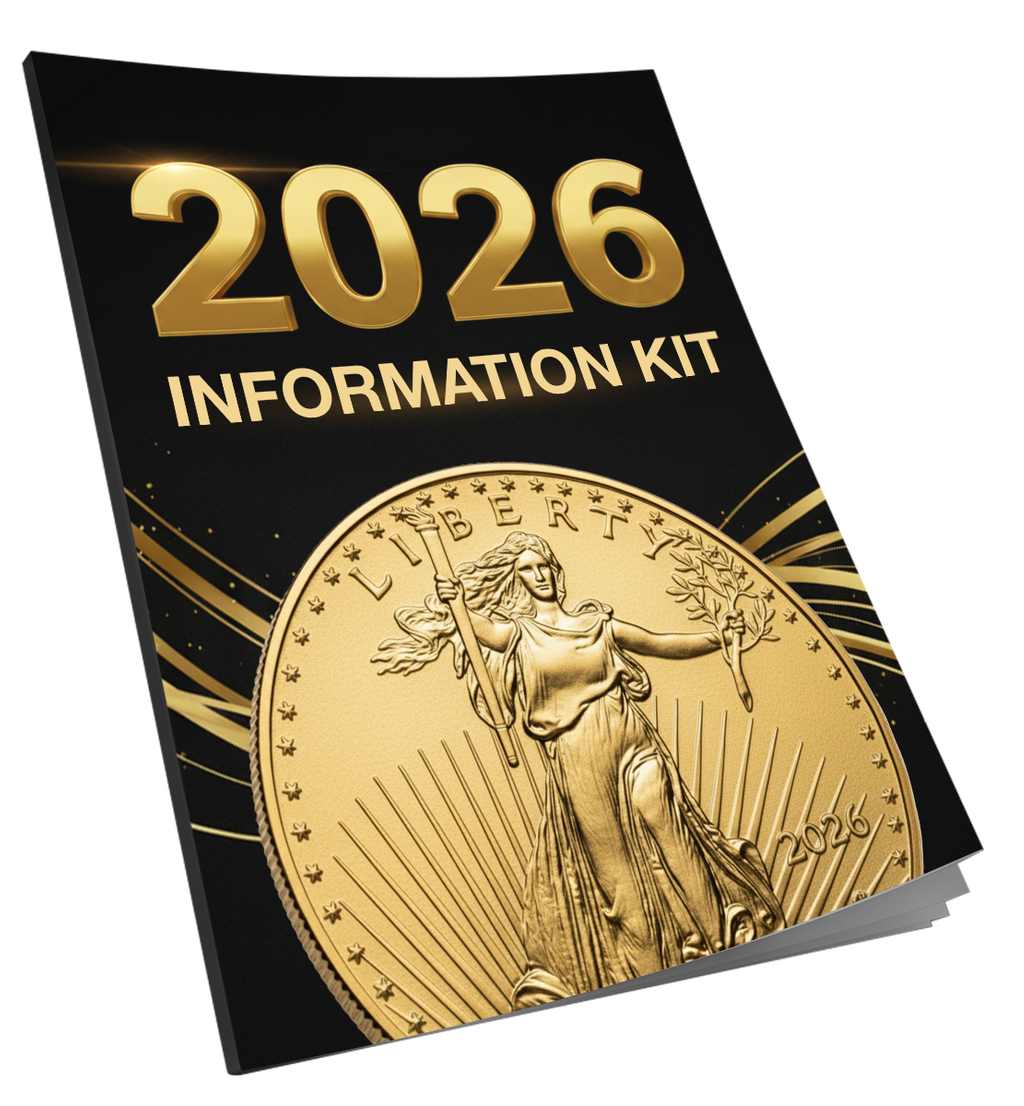
Free 2026 Information Kit
Get the 2026 Platinum IRA Information Kit — Free
Covers Platinum IRA vs. etf, IRS purity and storage rules, custodian fee schedules, and the full rollover process in plain English. Plus: Birch Gold Group is currently offering up to $20,000 in free precious metals on qualifying rollovers.
Free • No obligation • IRS-approved custodian • Speak with a specialist
How We Compiled the Figures on This Page
We think you should know exactly where these numbers come from, and what we did not check.
Tax and IRS rules come from the statute. Every purity, storage, contribution, and distribution rule cited here is taken from IRC § 408(m)(3), IRS Publication 590-A and 590-B, IRS Rev. Proc. 2024-61, and the SECURE 2.0 Act. Each section links its sources at the bottom.
State tax treatment comes from the state's own revenue authority, cross-checked against current-year filing guidance.
Company fees and minimums come from published fee schedules, cross-checked in July 2026 against independent reviews. These are the three companies we compared — not a survey of the whole market.
Reputation figures are third-party, taken from Better Business Bureau and Trustpilot listings. We do not score companies ourselves, because a score we invented would tell you nothing.
Promotions are labelled as promotions. Waived first-year fees and metals bonuses are advertised offers with qualifying conditions, not permanent account terms.
What we did not do: we have not audited these companies, held accounts with them, or independently verified their storage arrangements. Confirm every fee in writing before you sign anything.
Price context: the live platinum spot price is shown at the top of this page. Spot moves every trading day, and every dealer adds a premium above spot — typically 2%–8% depending on whether you buy bars or coins. Confirm both the current spot price and your dealer's premium in writing before you buy.
Disclosure: RolloverGuidance.com earns a commission if you open an account through links on this page. This costs you nothing and does not change what we publish — the fee tables and IRS rules above are the same whether or not you use our links.
What's In This Guide — Click Any Section to Jump There
Platinum IRA vs. Platinum ETF: The Core Distinction
The primary platinum ETF is the abrdn Physical Platinum Shares ETF (PPLT), which manages approximately $1.0 billion in assets and holds platinum bullion at Zurich-based vaults. Comparing a Platinum IRA to PPLT involves the same ownership-vs.-efficiency tradeoffs as gold and silver, with additional considerations for platinum's smaller, less liquid market.
The fundamental difference is ownership: a Platinum IRA holder owns allocated physical platinum in their name at an IRS-approved depository. A Platinum ETF holder owns shares of a trust — an electronic claim on gold held by the trust's custodian bank. Both provide platinum price exposure, but the nature of the asset, the cost structure, and the rights of the investor differ substantially.
Side-by-Side Comparison: Platinum IRA vs. Platinum ETF
Feature
Platinum IRA (Physical)
Platinum ETF (Fund Shares)
Assets Under Management
No published aggregate; estimated $1–$3 billion total U.S. Platinum IRA assets.
PPLT: ~$1.0 billion AUM (2025). Much smaller than GLD or SLV, reflecting platinum's smaller investor base.
Annual Cost
$100–$300 custodian + 0.20%–0.40% storage = $300–$700/year on $100,000.
PPLT expense ratio: 0.60% = $600/year on $100,000. Among the highest ETF expense ratios for a major precious metal fund.
Dealer Premium
American Platinum Eagles: 8%–15% above NYMEX. Bars: 3%–6%.
Bid-ask spread: $0.05–$0.20/share — wider than GLD or SLV due to lower liquidity. No upfront premium to NAV.
Industrial Exposure
Direct physical exposure — same price as NYMEX platinum futures settlement.
Same direct exposure through fund's physical holdings. No futures roll cost.
Liquidity
Low — 3–10 business days for liquidation.
Moderate — PPLT averages approximately 150,000 shares/day on NYSE Arca, significantly less liquid than GLD or SLV.
Tax Treatment: The IRA Advantage
Both a Platinum IRA and a Platinum ETF held in an IRA enjoy the same IRA tax treatment: tax-deferred growth (traditional) or tax-free qualified distributions (Roth). The collectibles tax disadvantage of Platinum ETFs (28% long-term capital gains rate in a taxable account) is irrelevant inside an IRA — the IRA wrapper overrides the collectibles classification for tax purposes inside the account.
The tax difference between a Platinum IRA and a Platinum ETF only matters in a taxable account. In an IRA, both are treated identically under ordinary income tax rules at distribution. This means the primary decision criteria for IRA investors are cost, liquidity, and ownership rights — not tax treatment.
Which Is Better for Your Retirement?
PPLT's 0.60% expense ratio is higher than platinum IRA recurring fees for large accounts, making PPLT less obviously cost-superior to a Platinum IRA than GLD is to a Gold IRA. For accounts above $200,000, a Platinum IRA with flat-fee custodian pricing may be more cost-efficient than PPLT on an annual basis. The physical ownership benefit — direct claim on allocated bars — remains the primary argument for choosing a Platinum IRA over PPLT.
PPLT's 0.60% expense ratio makes it the most expensive major precious metals ETF by annual cost, reflecting platinum's storage and handling costs as a heavy, industrial metal requiring specialized vault facilities.
Who Should Choose a Platinum IRA
Investors who prioritize physical ownership and want in-kind distribution rights at retirement
Long-term holders (10+ years) who can amortize the upfront dealer spread over time
Retirees who want to convert IRA assets to personally held physical platinum at distribution
Investors with estate planning goals that benefit from allocated metal ownership
Who Should Choose a Platinum ETF (Inside an IRA)
Investors prioritizing cost minimization and low expense ratios
Investors needing high liquidity and the ability to quickly rebalance
Those comfortable with trust-based ownership through an institutional custodian bank
Investors with shorter time horizons where the upfront dealer spread is harder to amortize
Sources: Platinum ETF prospectus filings; SPDR Gold Shares Annual Report 2024; World Platinum Council 2025 data.
Birch Gold Group gives you legal title to physical platinum — serial numbers, segregated storage, and in-kind delivery at retirement. No ETF counterparty risk.
Get the Full Platinum IRA vs. ETF Comparison From a Specialist
Birch Gold Group specialists give you an honest comparison of Platinum IRA vs. ETF costs, tax treatment, and ownership rights for your specific situation.
Free consultation • No obligation • IRS-approved custodian
Would you rather ask your questions out loud? A Birch Gold Group specialist will walk you through it — free, and you are never obligated to open anything. Talk to a Specialist Now — Free
IRS Compliance: Platinum IRA Rules That Apply in All Cases
Regardless of which vs. etf strategy you pursue, Platinum IRA compliance requirements are fixed by IRC Section 408(m)(3):
Fineness: Platinum held in an IRA must meet the IRS minimum fineness of 99.95%.
Storage: Same IRS-approved depository requirement as gold and silver.
No Home Storage: Home storage arrangements are prohibited and constitute a taxable distribution.
Approved Products: The American Platinum Eagle has explicit statutory authorization. The Canadian Platinum Maple Leaf meets the fineness standard. Platinum has a much narrower approved coin market than gold or silver.
Is a Platinum IRA or a Platinum ETF better for long-term investors?
For long-term holds of 10+ years, the Platinum IRA's upfront costs (3%–8% dealer premium) become a smaller percentage of total value as the metal appreciates. ETFs have lower upfront costs but charge annual expense ratios (0.25%–0.50%) that compound indefinitely. On a $100,000 position held for 20 years, the annual ETF expense ratio often exceeds the amortized Platinum IRA upfront costs. However, the Platinum IRA's value also depends on the appreciation rate — in a flat market, ETFs win on cost.
Do Platinum ETFs held inside an IRA avoid the 28% collectibles tax?
Yes — inside an IRA, the 28% collectibles capital gains rate that applies to Platinum ETFs in taxable accounts is irrelevant. All IRA distributions (traditional Platinum IRA and Platinum ETF IRA) are taxed as ordinary income regardless of how the underlying asset would be taxed outside the IRA. The collectibles tax disadvantage of Platinum ETFs only matters if you hold them in a taxable brokerage account, not inside any IRA wrapper.
Can I hold a Platinum ETF inside a Platinum IRA?
Technically, a self-directed IRA could hold ETF shares, but the purpose of a Platinum IRA is to hold physical metal. Most precious metals SDIRA custodians are set up specifically for physical metals, not securities. A conventional IRA (at Fidelity, Schwab, Vanguard) can hold Platinum ETFs but cannot hold physical Platinum. The two structures serve different ownership goals and are maintained through different custodial systems.
What happens to a Platinum ETF if its custodian fails?
Major Platinum ETFs (SPDR Gold Shares, iShares Platinum Trust) hold physical Platinum through institutional custodian banks (HSBC, JPMorgan). If the custodian bank fails, the ETF's gold — held in allocated, segregated accounts — should be protected from the bank's general creditors. However, unallocated or commingled holdings are more vulnerable. A physical Platinum IRA at an IRS-approved depository with segregated storage provides clearer individual ownership rights than an ETF trust structure.
Can I convert a Platinum ETF IRA to a physical Platinum IRA?
Yes. You can sell the Platinum ETF shares within the IRA (no tax event inside the IRA) and roll the cash proceeds to a self-directed IRA custodian that accepts physical Platinum. The SDIRA custodian purchases physical Platinum through an approved dealer. This transfer is a tax-free trustee-to-trustee transfer as long as the funds move directly between custodians. You do not pay taxes on ETF gains inside the IRA at the time of conversion.
Is a Platinum IRA a good investment?
A Platinum IRA is appropriate for investors who want to diversify retirement savings with physical metal, hedge against dollar devaluation and inflation, and maintain the tax benefits of an IRA. Platinum is not a growth investment like stocks — it does not pay dividends. Its primary role is as a store of value and a portfolio diversification tool. Most financial advisors suggest keeping precious metals to 5%–15% of a retirement portfolio.
Can I roll over my 401(k) into a Platinum IRA?
Yes. Most 401(k) plans, 403(b) plans, traditional IRAs, TSP accounts, and other qualified retirement plans can be rolled into a Platinum IRA through a direct rollover (trustee-to-trustee transfer). Direct rollovers avoid mandatory 20% federal withholding and the 60-day rollover window risk. The rollover itself is not a taxable event — tax is deferred until distributions are taken.
Where is my Platinum stored in a Platinum IRA?
Physical platinum held in an IRA must be stored at an IRS-approved depository — not at home or in a bank safe deposit box. The major IRS-approved depositories are: Delaware Depository (Wilmington, DE), Brink's Global Services, International Depository Services (IDS), CNT Depository (Bridgewater, MA), HSBC Bank USA, and JPMorgan Chase. Your SDIRA custodian handles the shipment and storage on your behalf. You receive account statements showing your metal's serial numbers and quantity.
What taxes do I pay when I take money out of a Platinum IRA?
Traditional Platinum IRA distributions are taxed as ordinary income at your marginal rate. Roth Platinum IRA qualified distributions (age 59½+ and 5-year rule satisfied) are 100% tax-free. Early distributions before age 59½ from a traditional Platinum IRA incur a 10% penalty plus ordinary income tax, unless a specific exception applies (disability, medical expenses, death, etc.).
Official Sources & Legal References
All rules and data on this page are drawn from primary IRS and government sources. Verify with a licensed tax advisor before making financial decisions.
IRC Section 408(m)(3) — Governing statute for precious metals in IRAs. Cornell Law / LII
Taxpayer Relief Act of 1997 (P.L. 105-34) — First permitted physical gold, silver, platinum, and palladium in IRA accounts. GovInfo.gov
IRS Announcement 2023-10 — Confirms home-storage Gold IRAs do not comply with IRC Section 408(a). IRS.gov
SECURE 2.0 Act (P.L. 117-328) — Changed RMD age to 73/75, reduced early-withdrawal penalty on missed RMDs from 50% to 25%. Congress.gov
IRS Notice 2025-67 — 2026 IRA contribution limits ($7,500 / $8,600 catch-up) and related COLA adjustments. IRS.gov
IRS Uniform Lifetime Table (Rev. Proc. 2022-38) — RMD distribution period factors by age, effective January 1, 2022. IRS.gov
McNulty v. Commissioner, 157 T.C. No. 10 (2021) — Tax Court upheld IRS disqualification of a home-storage Gold IRA. U.S. Tax Court
BAPCPA 2005 (11 U.S.C. § 522) — Federal bankruptcy IRA exemption (~$1.62M per person, 2026 inflation-adjusted). House.gov
You've Compared Both Options — Make the Right Call
Open a Physical Platinum IRA — Not a Fund, Not a Certificate
Birch Gold Group gives you legal title to your physical platinum — serial numbers, certificates, and direct custodian statements. No counterparty risk, no fund fees.
Would you rather ask your questions out loud? A Birch Gold Group specialist will walk you through it — free, and you are never obligated to open anything. Talk to a Specialist Now — Free